RadicalxChange

ASPIRE National Forum · Canberra

The Policy Lab

Arts, culture and community participation as part of health in Australia

Monday 10 August 2026 · Museum of Australian Democracy at Old Parliament House, Canberra

Convened by ASPIRE — the Australian Social Prescribing Institute for Research and Education; Policy Lab designed and facilitated by RadicalxChange.

On Monday 10 August 2026, ASPIRE convened national and international leaders, practitioners and researchers at the Museum of Australian Democracy to advance the inclusion of arts, culture and creative practice in healthcare — one of the clearest, most under-recognised levers for prevention and wellbeing. Clinical services alone cannot address chronic disease, mental ill-health, loneliness and social fragmentation; governments already fund much of the work that can, but the value gets recorded in separate portfolio ledgers.

The room included State, Territory and Commonwealth public servants across Health, Arts, Treasury and Finance, Social Services, Home Affairs and Infrastructure; researchers from universities, think tanks and not-for-profits; arts and culture practitioners, community-engaged organisations and cultural institutions; community services; primary care and mental health providers; and philanthropy and civil society. In the morning the room heard evidence and practice from global and Australian experts already delivering these connected approaches. In the afternoon, RadicalxChange facilitated a Policy Lab to turn that evidence into coordinated action.

73participants voting
106statements deliberated
6,723votes cast
11priorities weighed by 62 voters

The two questions put to the room

Pol.is deliberation

“What's actually going on right now with arts, culture and community participation as part of health in Australia?”

Quadratic vote

“Given everything we've explored today, where should the ecosystem put its energy over the next 12 months?”

00 · The TL;DR

This room agrees on a lot. Cross-sector partnership was the one statement every single voter endorsed; health is built in daily life, not in hospitals; and community organisations are already delivering health outcomes they are neither funded nor recognised for. The idea that arts and culture make no measurable difference to health was thrown out 66 votes to 1. The splits are about what could go wrong and who should pay: the largest group thinks the evidence is in and wants organised advocacy at scale; a second guards the arts against being turned into an instrument; a third wants government to own this beyond the electoral cycle. Asked where to put the next twelve months of energy, the room spread its credits across a broad, connected agenda — topped by a shared evidence framework that measures value across portfolios — and put more demonstration sites last.

01 · The common ground

What the room agreed on

Four threads drew support from every opinion group. The open questions the data surfaced — the evidence base, the role of philanthropy, the role of government, incentives and scale — come next.

agree pass disagree

Cross-sector partnership is the point

The one unanimous statement of the day, and its neighbours: investment and virtue don't belong to health or to the arts alone, and the connecting mechanisms are the missing infrastructure.

“Cross sector partnerships are essential”

#63 written live

100% agree (64/64) · all groups ≥ 100%

Supporting statements & group detail

By group, for the statement above:

100% agree (28/28)
100% agree (18/18)
100% agree (18/18)

“Should be cross sector investment.”

#52 written live

93% agree (63/68)

97% agree (30/31)
89% agree (17/19)
89% agree (16/18)

“It’s time to stop trying to locate virtue within health or within arts. Cross sector partnering is essential.”

#96 written live

91% agree (53/58)

89% agree (25/28)
93% agree (14/15)
93% agree (14/15)

“The bridges and mechanisms that connect health and the arts are the missing infrastructure, not more programs.”

#20 seed

83% agree (57/69)

84% agree (26/31)
80% agree (16/20)
83% agree (15/18)

“Cross sector collaboration needs to be funded and recognised through policy incentives.”

#75 written live

89% agree (57/64)

97% agree (28/29)
76% agree (13/17)
89% agree (16/18)

Health is built in daily life

Not in hospitals or clinics: arts, culture and creative outlets belong in health prevention, and connecting clinical care to community activity is worth doing.

“Health is built in daily life, not in hospitals or clinics.”

#35 seed

91% agree (63/69) · all groups ≥ 89%

Supporting statements & group detail

By group, for the statement above:

90% agree (27/30)
95% agree (19/20)
89% agree (17/19)

“Arts, culture and creative outlets should be considered essential parts of health prevention.”

#33 seed

93% agree (65/70)

100% agree (30/30)
75% agree (15/20)
100% agree (20/20)

“Social prescribing, neighbourhood health or other connections between clinical care and arts and cultural outlets are still treated as a nice-to-have rather than core health infrastructure.”

#13 seed

93% agree (64/69)

97% agree (30/31)
79% agree (15/19)
100% agree (19/19)

“We need a paradigm shift to a wellbeing economy that prioritises human and ecological flourishing, not corporate profit maximisation”

#106 written live

89% agree (55/62)

90% agree (26/29)
82% agree (14/17)
94% agree (15/16)

Communities are already delivering — unrecognised

Community organisations produce health outcomes they are neither funded nor recognised for; local capacity and genuinely participatory design are what needs nurturing.

“Community organisations are currently delivering health outcomes they are neither funded nor recognised for.”

#3 seed

84% agree (59/70) · all groups ≥ 76%

Supporting statements & group detail

By group, for the statement above:

86% agree (25/29)
76% agree (16/21)
90% agree (18/20)

“Capacity within our community structures need to be nurtured and developed so we can support localised solutions”

#67 written live

92% agree (59/64)

100% agree (30/30)
75% agree (12/16)
94% agree (17/18)

“True local participatory design is essential for meaningful engagement”

#94 written live

93% agree (56/60)

96% agree (27/28)
88% agree (14/16)
94% agree (15/16)

“There are pockets of good work with no way to consistently evaluate and no consistent referral pathways”

#55 written live

86% agree (55/64)

83% agree (24/29)
82% agree (14/17)
94% agree (17/18)

Scale carefully — and stop re-proving the case

Nobody in the room disputed that this work matters: the claim that it makes no measurable difference was rejected 66–1. Scaling should protect the relationships and local character that make it effective.

“Scaling what works in this space should be done carefully, so it doesn't strip out the relationships, creativity and local character that make it effective.”

#39 seed

93% agree (63/68) · all groups ≥ 85%

Supporting statements & group detail

By group, for the statement above:

93% agree (27/29)
85% agree (17/20)
100% agree (19/19)

“Evidence continues to grow about the impacts of arts participation on welling, and in arts in health practice. Great examples of practice”

#54 written live

86% agree (54/63)

93% agree (27/29)
67% agree (12/18)
94% agree (15/16)

“I don't believe arts and culture make a measurable difference to health outcomes.”

#29 seed

1% agree (1/69) — rejected across every group — the strongest disagreement in the data

3% agree (1/31)
0% agree (0/20)
0% agree (0/18)

“The idea that we can grow something to national scale while keeping it intimate and human is not realistic”

#44 seed

25% agree (17/67) — rejected: the room believes scale and intimacy can coexist

20% agree (6/30)
28% agree (5/18)
32% agree (6/19)

02 · The three splits

Three ways of seeing

Pol.is clusters participants by how they voted, not who they are. Three groups emerged. They share the common ground above; what separates them is what they think could go wrong, and who they think should pay. Group names are editorial readings of the votes — the letters match the read-out shown in the room.

A — Momentum Makers

31 participants

The largest group. Thinks the evidence is in — “very strong”, needing “structured leadership and advocacy” — and that committed and passionate people are what pushes the agenda forward: not one member voted otherwise on either. Ready to scale from the good local examples Australia already has, without running more pilots.

Defining statements & group detail

“The evidence is very strong. It needs structured leadership and advocacy.”

#87 written live

80% agree (48/60)

100% agree (28/28)
47% agree (8/17)
80% agree (12/15)

“Committed and passionate people push the agenda forward.”

#70 written live

89% agree (57/64)

100% agree (29/29)
76% agree (13/17)
83% agree (15/18)

“We already have enough good local examples in Australia to justify scaling without running more pilots.”

#2 seed

79% agree (56/71)

90% agree (27/30)
48% agree (10/21)
95% agree (19/20)

B — Craft Guardians

21 participants

Sees the agenda from the arts sector's side and guards against the good going wrong: an arts-and-health push could become a perverse business model, framing arts primarily in health terms risks damaging the sector, and calling every park, library and choir “health infrastructure” risks stretching the term until it means nothing. The only group genuinely split on whether the evidence base is established.

Defining statements & group detail

“Framing arts and culture primarily in health terms risks damaging the arts sector.”

#14 seed

43% agree (30/69)

13% agree (4/30)
65% agree (13/20)
68% agree (13/19)

“This arts and health agenda could create a perverse business model that monetizes the experience in unhealthy ways”

#102 written live

53% agree (31/58)

30% agree (8/27)
75% agree (12/16)
73% agree (11/15)

“Calling every park, library and choir "health infrastructure" risks stretching the term until it means nothing and helps no one make better decisions.”

#41 seed

63% agree (44/70)

47% agree (14/30)
76% agree (16/21)
74% agree (14/19)

“The evidence base is still too weak to justify major health system investment.”

#11 seed

14% agree (10/69)

3% agree (1/29)
40% agree (8/20)
5% agree (1/20)

C — Long-Game Reformers

20 participants

Thinks government/s should pay for this, and wants a long-term agenda and funding at the centre. Philanthropy is currently funding work the government should be paying for — 18 votes to none — and short funding cycles are the single biggest barrier. The defining split is who pays, and the priority of thinking beyond the electoral cycle.

Defining statements & group detail

“Philanthropy is currently funding work that the government should be paying for.”

#9 seed

61% agree (42/69)

57% agree (17/30)
35% agree (7/20)
95% agree (18/19)

“Short funding cycles are the single biggest barrier to this work right now.”

#8 seed

68% agree (46/68)

80% agree (24/30)
26% agree (5/19)
89% agree (17/19)

“Funding for arts-based health programs should come from health budgets, not arts budgets.”

#28 seed

46% agree (31/68)

43% agree (12/28)
29% agree (6/21)
68% agree (13/19)

Per-group breakdowns cover the three clustered groups; one unclustered participant is counted in totals only. Group B's tallies on the seed statements include the facilitator seed account, which cast only passes.

03 · Uncommon ground

Ideas beneath the surface

A programme those who are divided might agree on: statements that carried every group despite the splits — experience-led rather than sector-led work, translation between the arts and health worlds, sustainability through existing approaches, and new, dedicated funding for scale.

“It doesn't have to be arts or health, it has to be an experience, and led by what the community needs The arts as a health behaviour”

#99 written live

78% agree (46/59)

79% agree (23/29)
87% agree (13/15)
67% agree (10/15)

“Arts communities don’t speak the same language as health industry, which limits effective communication”

#71 written live

76% agree (48/63)

72% agree (21/29)
76% agree (13/17)
82% agree (14/17)

“Consider how existing approaches can support sustainability”

#104 written live

75% agree (47/63)

93% agree (28/30)
53% agree (9/17)
63% agree (10/16)

“This work will not scale without new, dedicated funding.”

#7 seed

69% agree (47/68)

76% agree (22/29)
55% agree (11/20)
74% agree (14/19)

04 · The priorities

Where the room put its credits

Each of the 62 voters had 99 credits: one vote for a priority costs 1 credit, two votes cost 4, three cost 9 — piling credits on a single priority is expensive, so the totals reveal how much people care, not just what they prefer. Voting against an option was allowed; totals are net.

A shared health-and-culture evidence framework that measures public value across sectors, not just outputs within each silo 170 · 56 in favour · 2 against
Advocate to Treasury to embed wellbeing and prevention in decisions and institutions, with accountability for progress 169 · 52 in favour · 5 against
Support and training for artists/arts sector to enable health outcomes safely 168 · 55 in favour · 4 against
Longer funding cycles for community and arts organisations 163 · 56 in favour · 1 against
Place-based local coordination roles and referral infrastructure connecting health and community assets 162 · 56 in favour · 4 against
A dedicated cross-portfolio funding pool for health-generating infrastructure 160 · 57 in favour · 3 against
Improve mechanisms that enable government departments to work together rather than in silos 149 · 53 in favour · 4 against
Dedicated funding at local, state and commonwealth levels building capacity in community organisations to create health outcomes 133 · 54 in favour · 4 against
Targeted investment in communities with the fewest existing assets 103 · 44 in favour · 2 against
Documentation of leading Australian examples of combined arts-and-health approaches 89 · 48 in favour · 6 against
Funded demonstration sites at genuine scale 54 · 32 in favour · 10 against

62 voters · 99 credits each · 5,806 credits spent · aggregate totals only, by design.

The room funded an agenda, not a winner: the top eight priorities sit within 37 net votes of each other, from a shared health-and-culture evidence framework (170) through Treasury advocacy (169), support and training for artists (168), longer funding cycles (163), place-based coordination roles (162) and a cross-portfolio funding pool (160). The pattern breaks at the bottom: documentation of existing examples (89) and funded demonstration sites at genuine scale (54, with 10 of 62 voters spending against it) came last. Read together with the deliberation — where the room agreed it already has enough good local examples to justify scaling without more pilots — the message is consistent: stop proving, start building the connective tissue.
05 · How it happened

From evidence to a shared agenda

  1. Complete

    The forum

    Global and Australian experts already delivering connected arts-culture-health approaches presented evidence and practice through the morning.

  2. Complete

    Pol.is deliberation

    73 participants wrote and voted on statements about what's actually going on — 6,723 votes across 117 statements, 68 of them written live in the room.

  3. Complete

    The pause

    After a first round of evaluating priorities, the room stopped, collectively named the gaps in the option set, and decided together what additional options to put on the ballot before voting.

  4. Complete

    Quadratic vote

    62 voters weighed the final 11 priorities with 99 credits each — spending 5,806 credits on where the ecosystem should put its energy over the next 12 months.

  5. Under way

    What comes next

    ASPIRE shares these results with the ecosystem and carries the recommendations and actions of the event forward.

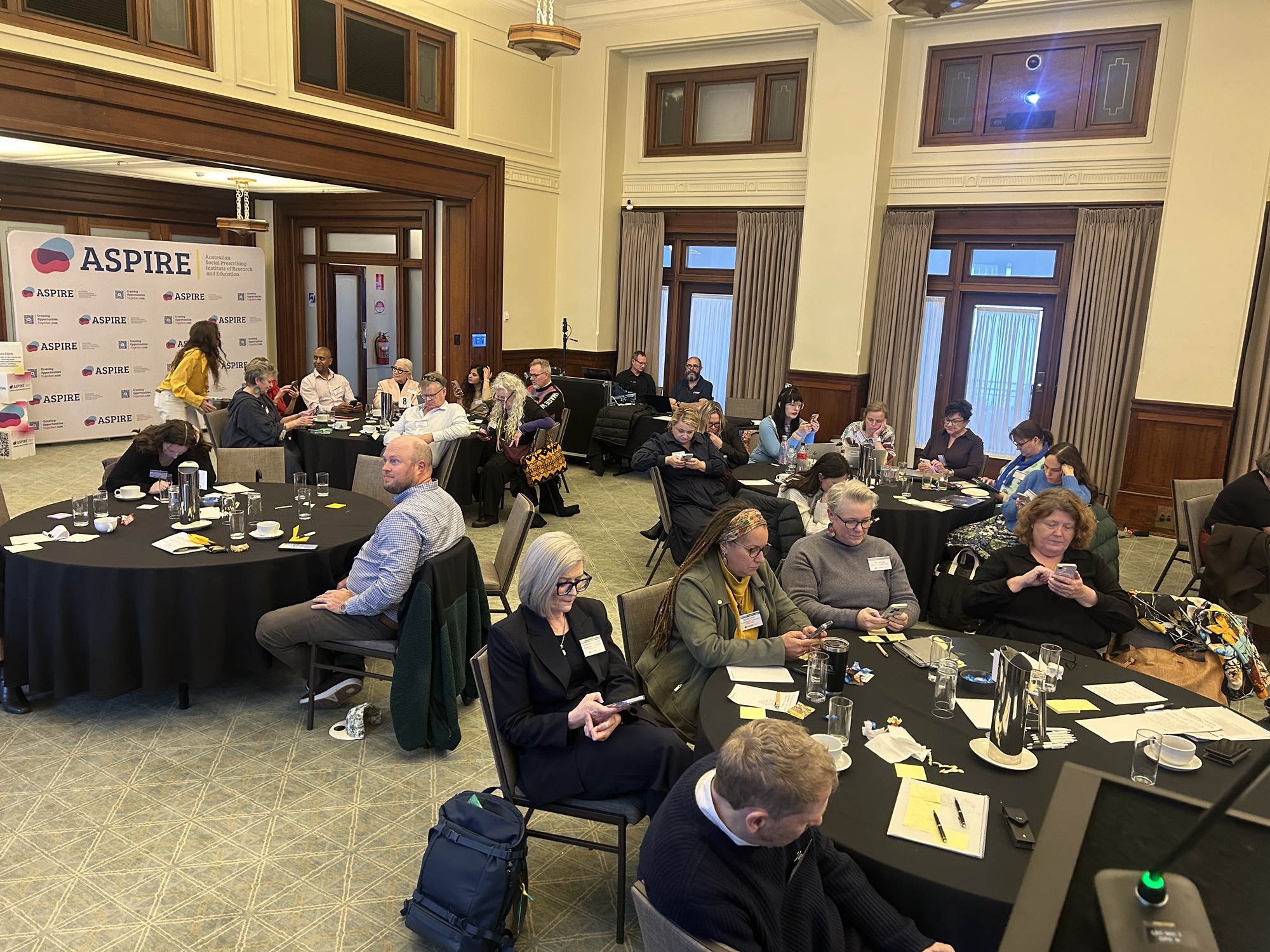
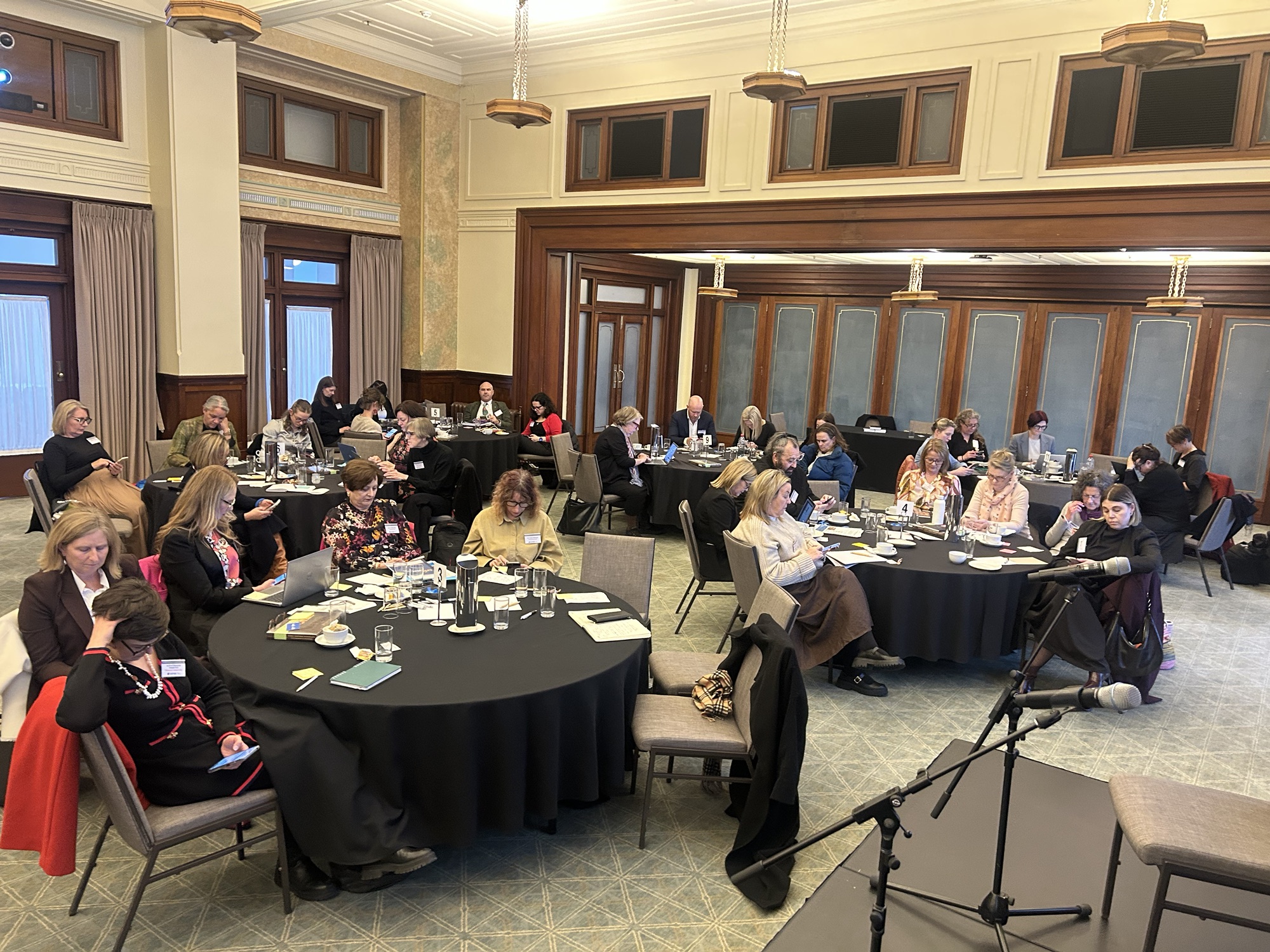
Participants at round tables in the Museum of Australian Democracy voting on their phones during the Policy Lab.
Inside the Policy Lab: the room mid-deliberation, votes going in phone by phone.

About this data

All results are anonymous by design: aggregate tallies and verbatim unattributed statements only — no names, no individual voting records. Every number on this page is computed from the raw exports, nothing is hand-typed. Full methodology notes are on the data page.

Deliberation run on Pol.is, an open-source tool for large-scale opinion mapping. pol.is · Quadratic vote run on RadicalxChange's open-source quadratic voting app. quadraticvote.radicalxchange.org

Run a deliberation like this

If you are interested in running a similar deliberation — and would like RadicalxChange's support in designing and facilitating it — get in touch: info@radicalxchange.org