
Greetings RadicalxChanger,
Audrey Tang and Caroline Green launched Civic AI last week at Oxford’s Institute for Ethics in AI. Since 2004 Oxford has been the epicenter of articulating AI’s existential risks, and today with Audrey’s help, it is advancing the natural follow-up: What should we do about it?
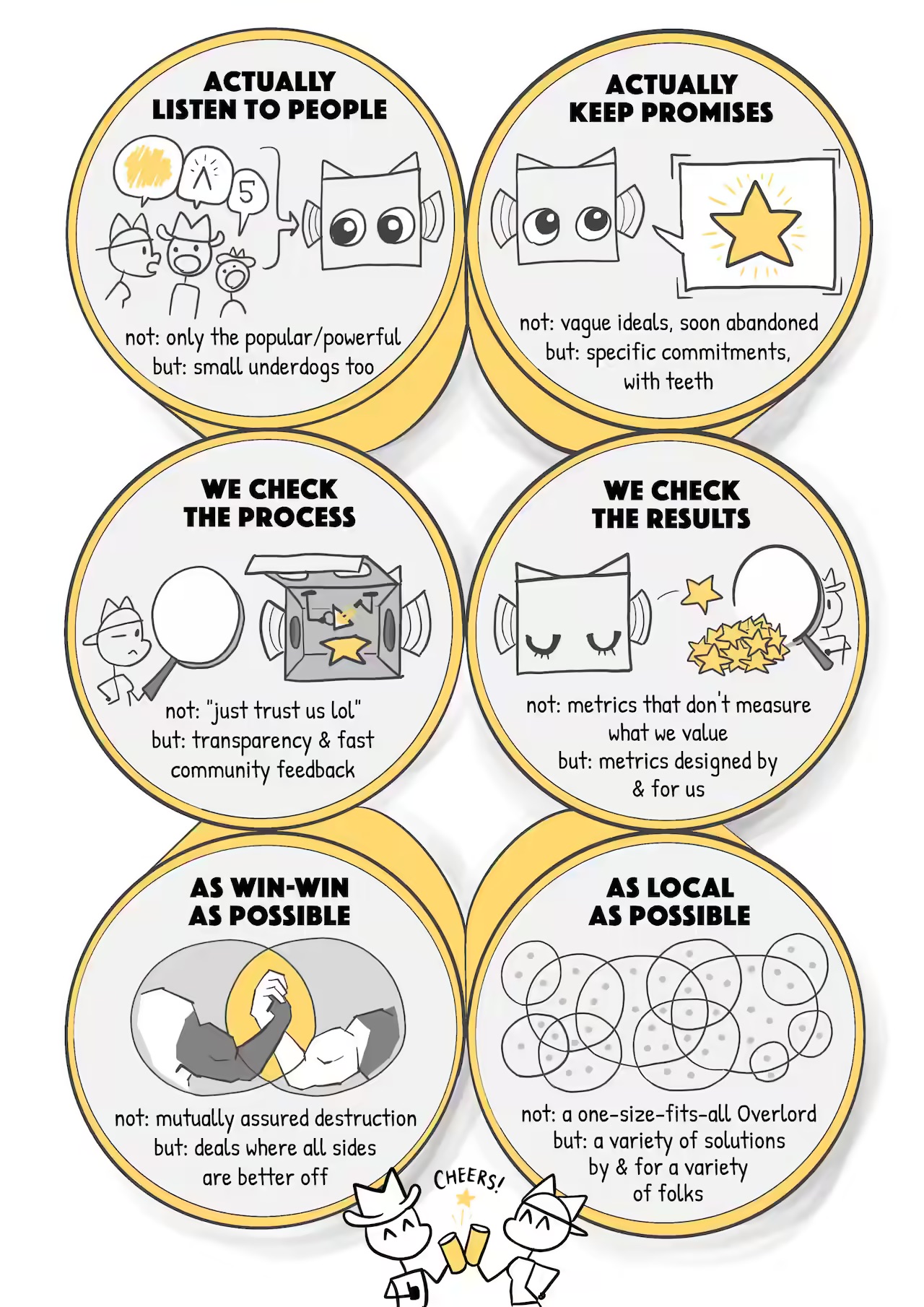
Drawing on Joan Tronto’s care ethics, and grounded in the political philosophy of ⿻ Plurality, Audrey and Caroline propose an engineering blueprint for kamis, AI agents that contribute to relational health rather than undermining it. They call it the 6-Pack of Care: Attentiveness, Responsibility, Competence, Responsiveness, Solidarity, and Symbiosis.
Two other RadicalxChange board members spoke at the Civic AI Conference.
Vitalik Buterin made the Jobsian case for AI as a bicycle for the mind rather than an autonomous vehicle you sleep inside. He warned that the monoculture of a few dominant AI models risks flattening the world, and called for privacy-preserving civic tech that enables distributed decision-making at scale.

Anne-Marie Slaughter connected the Kami concept to her own work on sapiens integra — the whole human needs belonging as much as self-actualization — and called the 6-Pack a revelatory application of care ethics to AI governance.

What makes Civic AI distinctive among AI governance frameworks is that it embraces what might look like vulnerabilities in our own nature: our needs for connection, for meaning-making, for giving and receiving care, for belonging to a place. Civic AI positions these not as human messiness to be optimized away, but as superpowers.
True to form, the conference included a live Polis exercise. Most statements found broad consensus, but three camps stood out: the “Innovation-Ready” who trust technology and resist mandates; the “Supportive Reformers” who want to deploy AI now but with strong social protections; and the “Principled Sceptics” who want to slow down until institutions are ready.
There’s a long road ahead, but Civic AI gives us a flashlight and a map. A book expanding the framework arrives later this year; practitioners can start now with the OpenClaw bootstrap guide. Explore the full project at civic.ai.
Collective Bargaining Over Data Reaches the White House
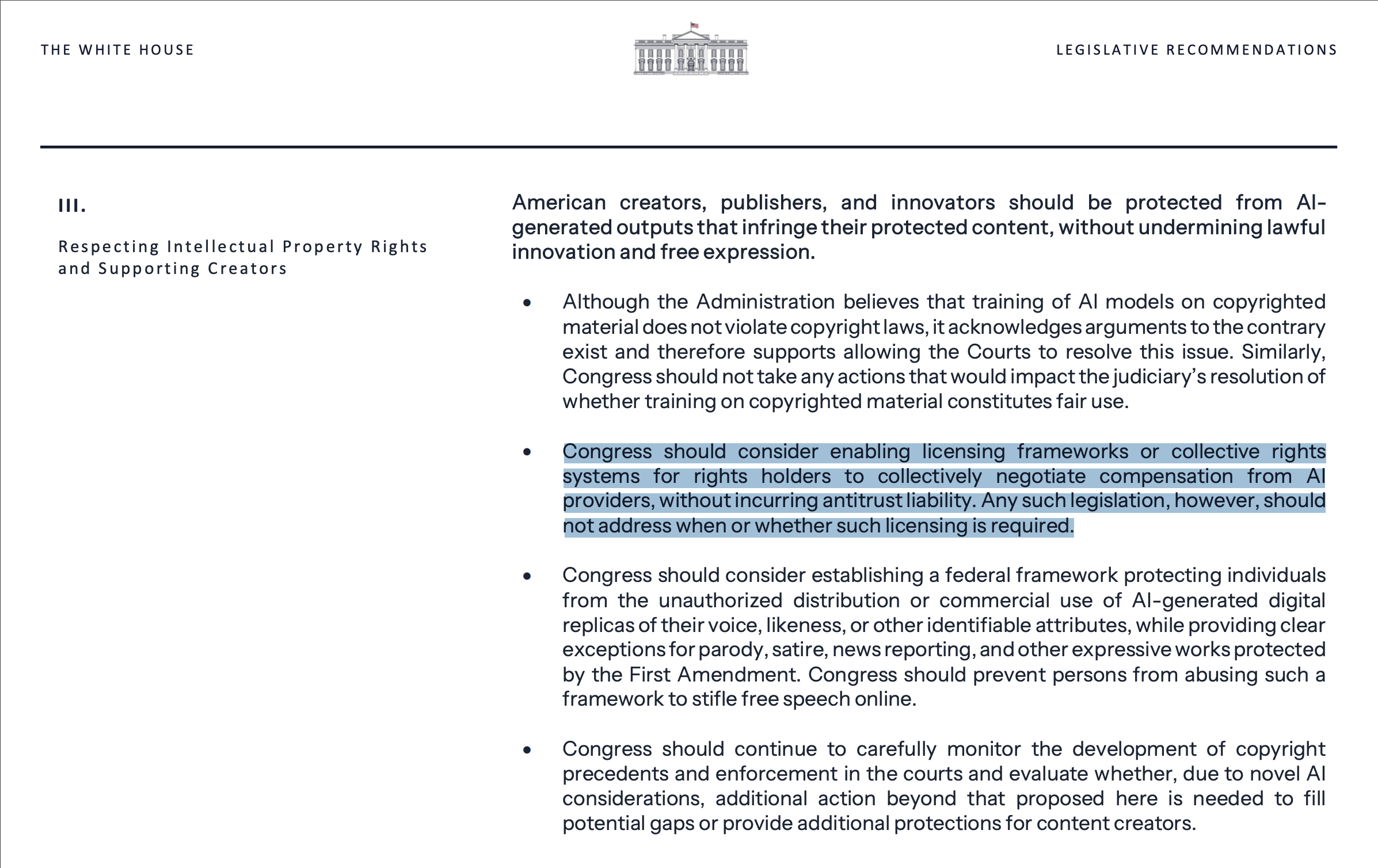
The Trump administration’s National AI Legislative Framework, released March 20, recommended that “Congress should consider enabling licensing frameworks or collective rights systems for rights holders to collectively negotiate compensation from AI providers, without incurring antitrust liability.”
The administration explicitly defers the fair use question to the courts, leaving the core copyright standoff unresolved. Their framework instead proposes the structural alternative we’ve been advocating: a negotiated settlement structure that doesn’t require courts or Congress to decide whether AI training is lawful, but gives people a mechanism to participate in the value their contributions generate.
We didn’t have a direct line to this provision, but we’ve been developing this idea and the sociotechnical architecture behind it for years, and it’s striking to see it surface in this blueprint. Especially after last month’s unsealed Anthropic memo revealed that CEO Dario Amodei considered this framework in 2021 — and concluded the market alone couldn’t produce it.
From Around the Pluriverse
→ The AI Doc: Or How I Became an Apocaloptimist
→ What 81,000 people want from AI
→ Statement from Faith Family Technology Network on Moral Guardrails in Artificial Intelligence
→ L’hérésie américaine : faut-il brûler Peter Thiel ?
→ Alliance for a Better Future
Where To Meet Us Next
April 1, Virtual: You’re invited to our April 2026 Community Call tomorrow, on Wednesday, April 1 at 9 am ET (UTC-5) | 3 pm CET (UTC+1). Please note the call time. Use this Typeform to add agenda items, and we’ll see you there!
Live long and prosper,
The RxC Team